Native vs Cross-Platform App Development: What Should You Choose in 2026?
- May 14, 2026
- 11 mins
- 5.7k
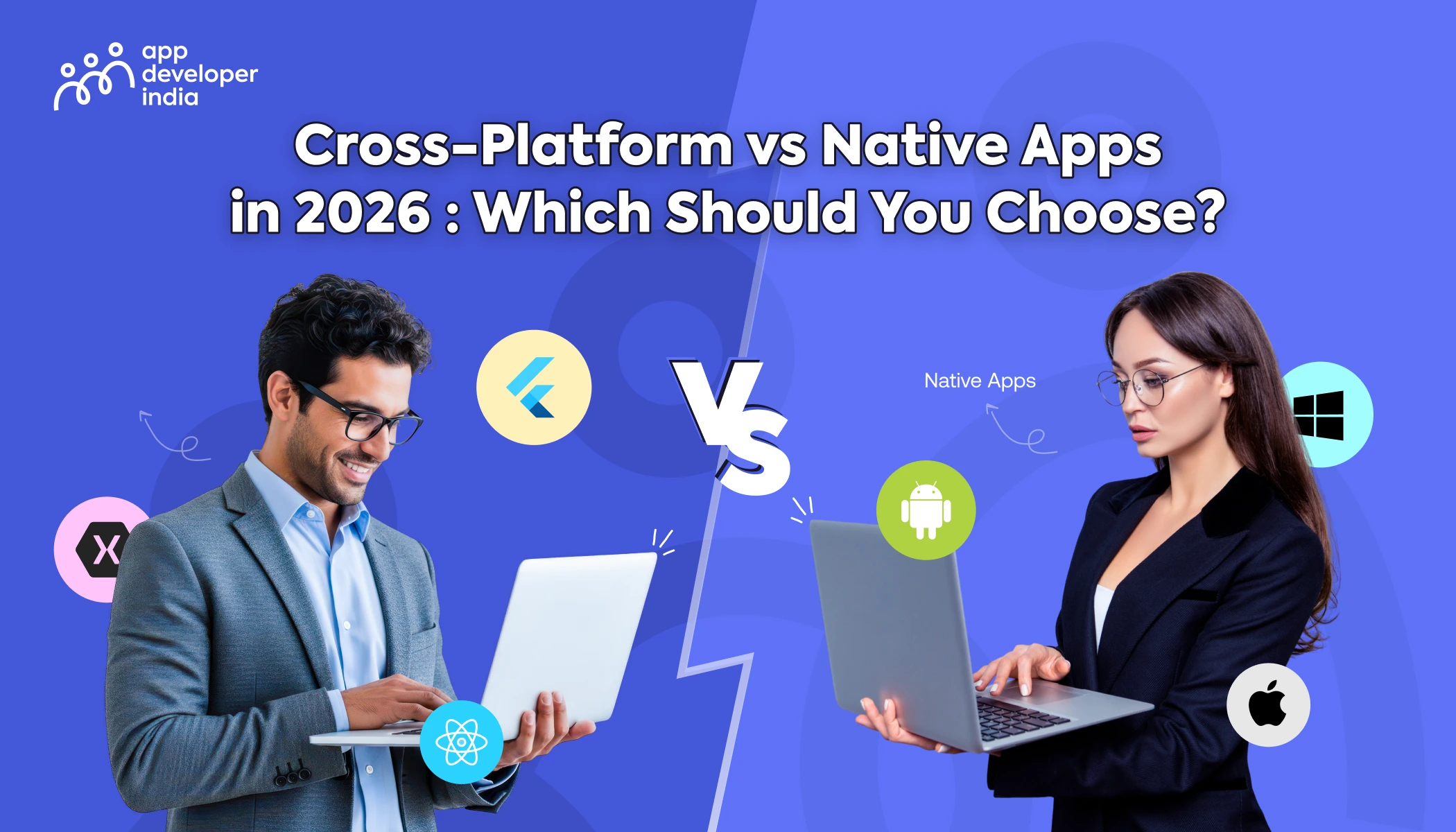

Selecting the most appropriate mobile app development strategy in 2026 is not merely a technical option. But it directly impacts your budget, launch time, user experience (UX), performance, maintenance, and scalability in the long run.
For many businesses, the confusion starts with one question- should we build native apps separately for iOS and Android, or should we use one shared codebase through Flutter, React Native, or another cross-platform framework?
It all depends on what you are building, who you are building for and how fast you want to launch & the room to move thereafter. This blog will analyse native vs cross platform app development, weigh both the alternatives & help you pick one that will best suit your business in 2026.
What Is Native App Development?
Native app development means building separate apps for different platforms like iOS and Android. For iOS, developers usually use Swift or Objective-C. For Android, they use Kotlin or Java.
Because native apps are made for one specific platform, they can use device features more smoothly, such as:
- Camera
- GPS
- Push notifications
- Biometric login
- Offline storage
- Payment tools
The main native app development advantages include better speed, stronger performance, smoother user experience & easier access to advanced device features. Native development is best for banking apps, healthcare apps, gaming apps, video apps, and enterprise solutions that need high security and performance.
What Is Cross-Platform App Development?
Cross-platform app development means building one app codebase that works on both iOS and Android. Frameworks like Flutter and React Native help developers create apps faster without writing separate code for each platform.
The biggest cross platform app development benefits include:
- Faster development
- Lower initial cost
- Easier updates
- Quicker launch
- Shared code for iOS and Android
This approach is useful for startups, MVPs, eCommerce apps, booking apps, delivery apps, social apps, and service marketplace platforms. In simple words, cross-platform development helps businesses launch apps faster, reach more users & reduce the effort of building two separate apps.
Native vs Cross-Platform App Development- The Core Difference
The table below compares both approaches across performance, cost, speed, scalability, maintenance, and ideal business use cases.
| Comparison Point | Native App Development | Cross-Platform App Development |
| Development Method | Built separately for iOS and Android. | Built using one shared codebase for multiple platforms. |
| Technologies Used | Swift or Objective-C for iOS, Kotlin or Java for Android. | Flutter, React Native, Xamarin, or similar frameworks. |
| Performance | Usually offers stronger speed, responsiveness & platform-level performance. | Performs well for most business apps, but may need extra optimization for complex features. |
| User Experience | Gives a more platform-specific experience for iOS and Android users. | Provides a consistent experience across both platforms. |
| Development Speed | Takes more time because separate apps are developed. | Faster to build because much of the code is reused. |
| Cost | Usually costs more due to separate development and testing. | More cost-effective, especially for startups and MVPs. |
| Device Feature Access | Better access to device features like camera, GPS, sensors, biometrics & offline tools. | Supports most device features, but complex integrations may need native support. |
| Maintenance | Updates may need to be handled separately for each platform. | Easier to maintain because many updates apply across platforms. |
| Best For | Banking, healthcare, gaming, AR/VR, enterprise & performance-heavy apps. | eCommerce, booking, delivery, education, marketplace & startup apps. |
| Business Fit | Better when performance, security & platform-specific workflows matter most. | Better when faster launch, wider reach & controlled cost are priorities. |
Native vs Cross-Platform App Development- Performance, Speed & Cost
Choosing between native and cross-platform apps becomes easier when you compare three things, how the app performs, how fast it can be built & how much it may cost.
1. Performance
Native apps usually run faster because they are built directly for one platform. An iOS app is made for iPhone users & an Android app is made for Android users. This helps the app use phone features like camera, GPS, storage, sensors & graphics more smoothly.
Native is better for apps that need:
- Real-time tracking
- Heavy animations
- Video processing
- AR/VR features
- Gaming features
- High security
Cross-platform apps also work well in 2026. Apps built with Flutter or React Native can support eCommerce, booking, delivery, education, lifestyle & business apps smoothly. But for very complex apps, native still performs better.
2. Development Speed
Cross-platform apps are usually faster to build because one codebase works for both iOS and Android. This saves time because developers do not have to build the same feature twice.
For startups, this is useful because they can launch an MVP faster, test the market, collect feedback & improve the app.
Native apps take more time because iOS and Android apps are built separately. Testing, fixing bugs & adding updates also take more time.
3. Cost
The cost of native vs cross platform apps depends on features, design, timeline, and app complexity.
| App Type | Estimated Cost Range |
| Basic Native App | $25,000 – $60,000 per platform |
| Advanced Native App | $80,000 – $200,000+ for both platforms |
| Basic Cross-Platform App | $20,000 – $45,000 |
| Advanced Cross-Platform App | $50,000 – $120,000+ |
Cross-platform is usually cheaper because one team can build for both iOS and Android. Native costs more, but it is better when performance, security & deep device access matter most.
Flutter vs Native App Development
This is a common debate, as Flutter has evolved into one of the preferred cross-platform options in rapid time.
With Flutter, developers can build visually enticing apps using a single codebase. When an app needs a unified design on iOS and Android, it is particularly advantageous. Due to the fact that Flutter allows developers a strong control over UI, it is appropriate for applications with custom interfaces, brand-heavy screens, dashboards and marketplace & consumer apps.
In contrast, your app demands platform-specific experiences, this is where native development makes a better choice. Native development gives you more flexibility if your iOS app and Android app needs to do things depending on how users are using them.
Use Flutter if you want development speed, consistent UI & code reuse. Opt for native when performance, device-level access & platform-specific behavior take priority.
React Native vs Native Apps Performance
The React Native vs native apps performance discussion depends heavily on app complexity.
React Native can deliver strong performance for many standard mobile applications. It works well for apps with forms, feeds, profiles, booking flows, chat features, catalogs & dashboards. Since React Native uses native components, the app can feel close to native when the architecture is planned properly.
However, native apps usually perform better for complex animations, high-frequency updates, advanced gaming, media-heavy features, or apps that rely deeply on device hardware.
So, React Native can be a smart choice for businesses that want faster development with a near-native feel. Native is better when performance cannot be compromised.
User Experience- Does the App Feel Different?
User experience depends on design quality, development skills, testing, and platform understanding.
Native apps usually match platform behavior more naturally. iOS users and Android users often expect different gestures, navigation styles, permissions & interface patterns. Native development makes it easier to follow those expectations.
Cross-platform apps can also deliver excellent user experience, but the team must be careful. A poorly built cross-platform app may feel generic if it ignores platform-specific details.
The best cross-platform apps do not simply copy the same interface everywhere. They use shared code intelligently while still respecting iOS and Android design expectations.
When Should You Choose Native App Development?
Native app development is a better choice when your app needs high performance, advanced security, complex integrations, or deep device access.
You should consider native development if you are building:
- Banking or fintech apps with strict security needs
- Healthcare apps with device integrations
- Gaming or AR/VR apps
- Video editing or media-heavy apps
- Enterprise apps with complex workflows
- Apps requiring advanced offline capabilities
- Apps where platform-specific experience is critical
Native is also a good choice when your business already has a validated product and wants to invest in long-term quality, performance & scalability.
When Should You Choose Cross-Platform Development?
Cross-platform development is a better choice when you need to launch faster, control costs & reach both iOS and Android users without building two separate apps.
You should consider cross-platform development if you are building:
- MVPs and startup apps
- eCommerce apps
- Marketplace apps
- Booking and appointment apps
- Food delivery or taxi apps
- Home service apps
- Education apps
- Internal business apps
- Content or community apps
Cross-platform is especially useful when your core features are similar across platforms and you want faster updates after launch.
Which Is Better Native or Cross-Platform Apps in 2026?
The honest answer- neither is better for every project.
Native is better when performance, security, platform-specific experience & deep hardware access are top priorities.
Cross-platform is better when speed, cost-efficiency, shared development & faster market entry matter more.
In 2026, cross-platform frameworks are powerful enough for many business apps. But native development still matters for apps development where performance and platform precision can directly affect user trust, retention, or revenue.
So instead of asking “which is better,” businesses should ask- what does our app actually need to succeed?
Read more: How to Hire Flutter or React Native Developers to Build Cross-Platform Apps Faster
Final Thoughts
Native vs cross platform app development is a scenario that should arise from your business goals, not from the best performing mobile app development trends.
Cross-platform development the smarter choice (If you are testing an idea, going to market fast with a cost-effective app for iOS & Android) Native may provide greater long-term value if you are building a complicated, large-scale, high-performance, security-sensitive or highly-customized product.
Confused Between Native and Cross-Platform? Build Smarter with Experts
Get expert guidance from AppDeveloperIndia to choose the right app approach for growth.
Frequently Asked Questions
Native apps usually offer stronger performance because they are built directly for one platform. Cross-platform apps can also perform well for most business use cases, but very complex apps may need native-level optimization.
Native apps may cost more to maintain because iOS and Android codebases are handled separately. Cross-platform apps usually reduce maintenance effort because many updates can be made from one shared codebase.
Cross-platform development is often better for faster global reach because it supports multiple platforms with shared development. Native development is better when scaling requires advanced performance, security, or region-specific platform customization.
Native apps often feel more platform-specific because they follow iOS and Android behavior closely. Cross-platform apps can also deliver strong user experience when designed carefully and tested across devices.
Businesses should evaluate app complexity, budget, timeline, performance needs, user experience goals, security requirements, integrations, maintenance plans & long-term scalability before choosing an approach.
Recent Blogs
Stay ahead with the latest tech trends with our informative blogs and
insider guide to hire the best talent.